1

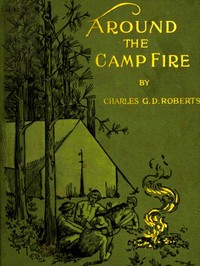
Around the Camp-fire — Story, Setting & Ideas
(1 User reviews)
365
Project Gutenberg
2015
Animals -- Fiction; Adventure stories; Storytelling -- Fiction; Hunting stories; Canoes and canoeing -- Fiction
Readers of public-domain and historical texts
Project Gutenberg digital edition
en
Edition facts
Words: 88,623
Reading time: 386 min
Text sections: 11
Source:
Project Gutenberg record #48986
A collection of hunting and camping tales set in late-19th-century New Brunswick, told by a first-person narrator whose voice shifts from breezy camaraderie to tense, sensory detail during life-threatening encounters with wild animals and natural hazards.
Editorial Edition Score
4.9/5
★★★★★
★★★★★
Calculated from edition completeness, EPUB availability, text structure and catalogue metadata. Not a user rating.
Edition quality
The narrator of Around the Camp-fire introduces himself as one of six canoeists who flee Fredericton for the Squatook wilderness, but the voice that emerges is less a group chronicle than a single, observant consciousness. In the opening chapter, the prose moves from the buoyant rhythm of “the vagrant blood that lurks in the veins of our race” to the precise, anxious catalog of a storm: “the wind came shrieking more madly down from the hills, and the boom-house began to creak and groan and shudder.” This shift—from collective adventure to solitary peril—defines the book’s narrative structure.
Each chapter is framed as a story told around a camp-fire, but the telling is not uniform. Some passages are brisk and anecdotal; others slow into minute-by-minute accounts of survival, such as the boom-house episode, where the narrator’s attention narrows to the floor’s bolts, the spray through cracks, and the weight of darkness. The voice remains consistently that of a literate outdoorsman—colloquial yet precise—and the pacing of the prose mirrors the tension of the events described.
A First-Person Voice That Shifts with the Scene
The narrator’s tone is not static. In the opening pages, he writes with the easy confidence of a seasoned camper: “In shirt-sleeves and moccasins we went.” The sentences are short, declarative, and communal. But when the storm traps him in the boom-house, the syntax grows more complex and the observations more granular. He notes that “the floor in particular was very carefully secured, being bolted to the boom at the four corners”—a detail that would be trivial in a calm moment but becomes vital under duress.
This shift is not merely stylistic; it signals a change in the narrator’s relationship to his environment. In the camp-fire frame, he is a raconteur; in the boom-house, he is a survivor. The prose does not announce the transition—it enacts it, tightening its focus as the danger increases. Readers attentive to sentence length and sensory detail will find that the narrator’s voice is the book’s most consistent character, adapting to each new threat without losing its distinctive blend of educated observation and backwoods practicality.
Pacing as a Tool for Tension
The book’s pacing is not uniform. Some episodes, like the panther encounter hinted at in the chapter title, are compressed into a few paragraphs; others, such as the boom-house ordeal, unfold over several pages with almost real-time duration. The narrator explicitly marks time—“I stayed in the water nearly half an hour”—and uses the delay of rescue to stretch the reader’s anxiety.
This variation is deliberate. The camp-fire frame allows for leisurely digression, but the embedded narratives often accelerate into breathless sequences. In the boom-house scene, the narrator’s frustration with Mat Barnes’s tardiness gives way to a grim inventory of the structure’s weaknesses. The prose mimics his mounting fear: short clauses pile up, and the repetition of “the wind” and “the waves” creates a rhythmic pressure. By contrast, the opening chapter’s description of the journey to the Squatooks is relaxed, almost idyllic. The reader learns to expect that any calm passage may be a prelude to a sudden, detailed crisis.
Recurring Details That Anchor the Narrative
Certain details recur across the excerpts, suggesting a deliberate pattern. The narrator frequently notes the sound of the wilderness: “the voices of wild rapids calling,” the wind “shrieking,” the boom-house “creak and groan.” These auditory cues often precede visual or physical danger, functioning as a kind of narrative warning system.
Another recurring element is the fragility of human-made structures in the wild. The boom-house is “well jointed and framed” but still leaks; the camp itself is a temporary shelter. The narrator’s attention to construction—bolts, cracks, the fit of a door—underscores the precariousness of his position. Finally, the delay of expected help appears in multiple forms: Mat Barnes does not return on time, and the narrator is left to wait. This pattern of abandoned expectation heightens the sense of isolation, even when the narrator is part of a group. These recurring details give the book a cohesive texture, binding disparate adventures into a single, anxious world.
Readers will find that the book rewards attention to its narrative voice and pacing. The camp-fire frame is not merely a conceit; it licenses a range of tones, from the anecdotal to the harrowing. The narrator’s shifts in sentence rhythm and sensory focus are the primary means by which the book builds and releases tension. Rather than skimming for plot, consider how the prose itself tells the story—how a sudden long sentence or a repeated sound can signal a change in the character’s fortunes. This is a book that asks to be read with an ear as much as an eye.
-

John Rebecca Garza - 3 weeks ago
{'review_type': 'negative', 'content': 'Around The Camp Fire consists of uninspired, rambling sketches that lack focus and depth. The attempts at humor fall flat, and the moralistic tone feels outdated. The characters are interchangeable, and the stories often fizzle out without a satisfying conclusion. A dull, tedious read that fails to capture the magic of its title.'} -
Bradley Knight - 3 weeks ago
{'review_type': 'neutral', 'content': "Around The Camp Fire has a charming premise and some genuinely enjoyable anecdotes. However, the stories vary in quality, with a few feeling flat and predictable. The overall structure is loose, which might make it less cohesive for some readers. Still, it's a pleasant read for a lazy afternoon."} -
James Thornton - 1 week ago
{'review_type': 'positive', 'content': "Around The Camp Fire is a delightful collection of stories that evoke the warmth and camaraderie of outdoor life. Each tale is engaging, filled with humor, adventure, and heartfelt moments. The author's vivid storytelling makes you feel like you're sitting around the fire with old friends. Perfect for anyone who loves classic Americana."}
Reader reflection
What was your reading experience?
Capture what you thought, learned, and would like to remember.
Your progress
0
/
10
2
How much did you enjoy the reading experience?
3
Would you encourage someone else to read it?
4
What was the reading difficulty like?
5
Did you gain anything practical from the text?
6
Did any part of the book feel personally relevant?
7
Was the book what you thought it would be?
8
Could you see yourself revisiting this book?
9
What changed or sharpened your thinking?
10







Aria Jackson
3 weeks ago