Voyages - eBooks
11 Books foundVoyages
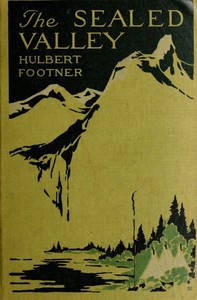
This category comprises 10 works that follow protagonists on purposeful voyages—by sea, land, or air—into regions unfamiliar to them. The emphasis is on travel as discovery, whether the destination is a foreign continent, a hidden valley, or an imaginary kingdom. The works range from Jules Verne’s nautical adventures to Louis Tracy’s Alpine mysteries and Edward Prime-Stevenson’s tale of two boys left to fend for themselves.
The works belong together because they share a narrative structure: departure, encounter with the unknown, and transformation. Even when the journey is forced (as in Dick Sands), the characters actively navigate new environments rather than simply endure. The category includes both realistic travelogues and fantastical quests.
Recommended Books
Represented authors include Jules Verne, David W. Bone, Louis Tracy, and Edward Prime-Stevenson. Settings span the Atlantic, Angola, Switzerland, Canada, and the Chusan Archipelago. Periods: 1878 to 1911. Forms include novel, translation, and editorial note.
This category differs from Sailors, Pirates & Oceans in that the journey is typically voluntary and goal-oriented; from Love, Family & Society in that the primary driver is exploration rather than relationship dynamics.
A classification limitation: some works here also contain elements of survival or romance, but the organizing principle is the journey itself, not the destination or the obstacle.