1

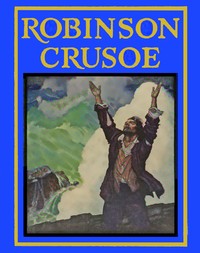
The Life and Adventures of Robinson Crusoe (1808) — Key Ideas to Explore
(10 User reviews)
1785
Project Gutenberg
2004
Shipwreck survival -- Fiction; Islands -- Fiction; Crusoe, Robinson (Fictitious character) -- Fiction; Atlantic Ocean -- Fiction; Adventure stories; Castaways -- Fiction
Readers of public-domain and historical texts
Project Gutenberg digital edition
en
Edition facts
Words: 239,481
Reading time: 1042 min
Text sections: 21
Source:
Project Gutenberg record #12623
This 1808 edition of Defoe's classic combines the first and second volumes, offering a continuous narrative from shipwreck to later adventures. The language shifts between Crusoe's methodical island journal and the looser, more comic tone of the bear-and-wolves episode, revealing a narrator who adapts his voice to circumstance.
Editorial Edition Score
4.9/5
★★★★★
★★★★★
Calculated from edition completeness, EPUB availability, text structure and catalogue metadata. Not a user rating.
Edition quality
This 1808 edition of The Life and Adventures of Robinson Crusoe combines the original 1719 narrative with its sequel, The Further Adventures, creating a single, extended arc. The text is prefaced by a biographical sketch of Defoe that speculates on his name change and early pamphleteering, framing the author as a contentious public figure. Readers encounter Crusoe’s voice in two distinct registers: the meticulous, almost diaristic account of island survival, and the looser, more anecdotal tone of the later travels. The bear episode, for instance, relies on comic timing and Friday’s broken English for effect, a marked departure from the earlier, more solitary prose. This edition thus preserves not only a famous survival story but also a record of how Defoe modulated his narrator’s language across different kinds of experience.
Two Voices, One Narrator
The excerpts reveal a narrator who shifts his style as his circumstances change. On the island, Crusoe’s language is methodical and inventory-like: “I had one labour to make me a Canoe, which at last I finished.” The sentence is plain, almost procedural, reflecting a mind focused on tasks. In contrast, the bear episode in the sequel adopts a more conversational, even theatrical tone. Crusoe describes Friday’s antics with a sense of amusement: “we had laughing enough indeed, but still could not imagine what the fellow would do.” The syntax becomes looser, with dashes and interjections (“Well, well,” said Friday). This shift suggests that Crusoe’s narrative voice is not fixed but adapts to the social dynamics of his later adventures, where he is no longer alone.
Friday’s Language as a Structural Device
Friday’s speech is rendered in a distinctive broken English that serves both characterization and pacing. His phrases—“me shoot by and then,” “you no come farther, me go”—are consistently non-standard, marking him as a foreign speaker. Defoe uses this not merely for realism but to create comic rhythm. In the bear scene, Friday’s dialogue builds suspense: “No shoot,” says Friday, “no yet; me shoot now me no kill; me stay, give you one more laugh.” The repetition and delayed action heighten the humor. Later, Friday’s explanation—“So we kill bear in my country”—contrasts with Crusoe’s rational query about guns, highlighting cultural difference. This linguistic pattern recurs throughout the sequel, giving Friday a distinct voice that punctuates the narrative.
Pacing Through Peril and Relief
The excerpts show Defoe alternating between tense, rapid sequences and slower, reflective passages. The wolf episode builds urgency through short clauses: “the howling of wolves ran much in my head”; “the approach of night, called us off.” The description of the “narrow defile” and “half an hour of sunset” creates a countdown. In contrast, the bear scene is deliberately drawn out, with Friday’s slow movements and the bear’s “leisurely” descent. Crusoe even comments on the delay: “we could not imagine what would be the end of it.” This variation in pace—from the compressed horror of the wolf attack to the extended comedy of the bear—demonstrates Defoe’s control over narrative tempo, using environmental details and dialogue to modulate tension.
Readers approaching this edition should attend to the shifts in narrative voice between the island sections and the later travels. The language of the first part is lean and factual; the sequel is more expansive, with dialogue and set pieces. Pay particular attention to how Friday’s speech patterns affect the rhythm of scenes, and how Defoe uses landscape details—snow, woods, twilight—to control pacing. These choices reveal a writer experimenting with the limits of first-person narration across a long, episodic work.
Elijah Jones
1 week agoEvelyn Robinson
3 weeks agoTheodore Walker
2 weeks agoBenjamin Jackson
1 month agoThere are no comments for this eBook.
Reader reflection
Take a moment to reflect on this book
Create a short personal record of your experience with this book.
Your progress
0
/
10
2
What was your overall reaction to the book?
3
Would you pass this book on to a friend?
4
Did the language feel accessible?
5
What did you appreciate most?
6
How clearly were the main ideas presented?
7
How useful did the reading feel?
8
How did the reading compare with what you expected?
9
What is the main idea you are taking away?
10


Scarlett Rivera
3 weeks ago