1

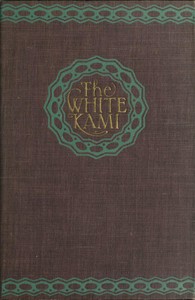
The White Kami: A Novel — A Closer Reading
(6 User reviews)
739
Project Gutenberg
2020
Islands -- Fiction; Young women -- Fiction; Adventure stories; Man-woman relationships -- Fiction; Clerks -- Fiction; Opium abuse -- Fiction
Readers of public-domain and historical texts
Project Gutenberg digital edition
en
Edition facts
Words: 99,615
Reading time: 434 min
Text sections: 38
Source:
Project Gutenberg record #62907
Edward Alden Jewell's novel follows Jerome's disillusioning marriage to Lili, tracing his shift from extravagant love to cold repugnance, and the transformative birth of a son. Set against island and sea backdrops, the story uses vivid contrasts—fog and clarity, passion and disgust—to chart a man's emotional unraveling.
Editorial Edition Score
4.9/5
★★★★★
★★★★★
Calculated from edition completeness, EPUB availability, text structure and catalogue metadata. Not a user rating.
Edition quality
The White Kami opens not with a grand adventure but with fog—a literal and figurative haze that sets the tone for Jerome's journey. The first chapter, simply titled "Fog," establishes a world where visibility is limited and certainty elusive. Jewell's prose mirrors this obscurity, often withholding direct access to characters' motives. Jerome, a clerk, finds himself drawn into a series of events that feel both improbable and inevitable, as if fate were a card player dealing from a marked deck. The novel's structure, divided into titled parts like "The Prince" and "The Pipe," suggests a deliberate patterning of experience, each section a phase in a larger, unsettling transformation.
The Architecture of Disillusionment
Jewell charts Jerome's emotional decline with surgical precision. Early in the marriage, Jerome feels his love "cooled and cooled, till at length there was little sentiment of any sort left." The narrator notes that Jerome "developed latent subtleties in the way of avoiding her," a phrase that captures the passive aggression of a man trapped by his own choices. The marriage is described as "only a word in the sand," an image of impermanence that undercuts the ceremony's weight. Yet Jewell complicates this portrait by showing Jerome's self-awareness: he "judged and condemned himself" from a later standpoint, even if that insight offers no escape. The prose oscillates between cold analysis and moments of raw feeling, as when Jerome watches Lili sleep and feels "compassion and disgust" simultaneously. This duality—love and repulsion, commitment and flight—forms the novel's emotional core.
The Weight of a Name: "The White Kami"
The title phrase appears as a chapter heading, suggesting a symbolic lodestone. "Kami" refers to a spirit or deity in Shinto, but the novel's context—opium abuse, exotic islands, and a troubled marriage—implies a more ironic or corrupted divinity. The white kami may be the poppy's narcotic, a false god that promises escape but delivers bondage. Jewell's catalog subjects list "Opium abuse" as a key theme, and the chapter "Whom the Poppy Captures" reinforces this. Yet the title also resonates with the novel's racial and cultural dynamics: a white man in non-Western settings, a "white" kami amid darker forces. The ambiguity is deliberate; the novel never reduces its symbols to single meanings. Readers should attend to how the phrase recurs and what it accrues—a ghost, a drug, a woman, an ideal—without expecting a definitive answer.
The Sea as Stage and Trap
Islands, schooners, and the Indian Ocean form the novel's geography, but Jewell uses these settings as psychological mirrors. The chapter "The Football of the Indian Ocean" suggests a world where human beings are tossed by forces beyond control. Jerome's journey is not a heroic voyage but a drift: he moves from fog to marriage to fatherhood with a sense of being acted upon. The sea offers no romantic escape; it is a space where "supreme emotions" become "elemental phases of human relationship." Even the schooner, a classic adventure vessel, becomes a site of domestic tension in "Love on a Schooner—" and "—And Elsewhere." Jewell undercuts the exotic by grounding it in mundane misery. The setting is not backdrop but agent: the "China Sea" at dawn, the "jungle" grave—each location carries a charge of loss or disillusionment, never of liberation.
Readers approaching The White Kami should set aside expectations of a straightforward adventure or romance. Jewell's novel is a study in emotional entropy, where grand gestures curdle into resentment and love becomes a trap. Pay attention to the gaps—what characters do not say, what the narrator withholds. The fog of the first chapter never fully lifts; it only shifts shape. This is a book less about what happens than about what happens inside a man who cannot escape himself.
Sophia Wright
6 days agoCamila Miller
4 weeks agoDylan Lopez
1 month agoAvery Sanchez
3 weeks ago-

Brittany Cole - 3 weeks ago
{'review_type': 'positive', 'text': "A fascinating and thought-provoking novel that delves into themes of identity, culture, and the clash between tradition and modernity. 'The White Kami' is beautifully written, with a mysterious, almost mythical quality that keeps you turning pages. A standout piece of literary fiction that lingers long after the last page."} -
Daniel Cruz - 3 weeks ago
{'review_type': 'negative', 'text': "'The White Kami' is a pretentious and convoluted novel. The prose is overwrought, the symbolism heavy-handed, and the characters fail to engage. The plot lacks coherence, making it a frustrating read. I found it more confusing than enlightening, and I wouldn't recommend it to most readers."} -
Nicholas Jackson - 2 weeks ago
{'review_type': 'neutral', 'text': "An intriguing story with a rich cultural backdrop and a mysterious central motif. The writing is elegant, but the pacing is uneven, and the conclusion leaves some threads unresolved. Still, it's a memorable read for those who enjoy character-driven literary fiction."}
Reader reflection
What was your reading experience?
Capture what you thought, learned, and would like to remember.
Your progress
0
/
10
2
How did the book work for you overall?
3
Would you encourage someone else to read it?
4
How demanding did the text feel?
5
How would you rate its originality?
6
How useful were the ideas in this book?
7
Did you relate to its people, ideas, or situations?
8
How much did the book move you?
9
What is the main idea you are taking away?
10






Camila Allen
2 weeks ago