1

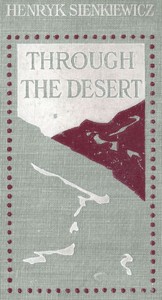
Through the Desert — Inside the Classic
(2 User reviews)
347
Project Gutenberg
2019
Africa -- Fiction; Bildungsromans; Wilderness survival -- Fiction; Children -- Fiction; Adventure stories; Kidnapping -- Fiction; Sudan -- History -- 1881-1899 -- Fiction
Readers of public-domain and historical texts
Project Gutenberg digital edition
en
Edition facts
Words: 133,123
Reading time: 579 min
Text sections: 13
Source:
Project Gutenberg record #60177
This editorial note examines how Henryk Sienkiewicz's 'Through the Desert' uses shifts in narrative pace and voice to portray a young boy's transition from condescending superiority to desperate responsibility during a survival journey across Sudan.
Editorial Edition Score
4.8/5
★★★★★
★★★★★
Calculated from edition completeness, EPUB availability, text structure and catalogue metadata. Not a user rating.
Edition quality
From the opening lines, the narrative voice in Henryk Sienkiewicz's Through the Desert establishes a clear hierarchy between the two child protagonists. Fourteen-year-old Stasch Tarkowski speaks to eight-year-old Nell with a condescending tone, calling her a 'little girl' and dismissing her vocabulary as childish. His speech is marked by a pedagogical certainty—'When you are as old as I am you will know everything'—that mirrors the colonial authority of the adult world around them. Yet the excerpts show this voice is not static. As the journey wears on, Stasch's confident pronouncements give way to internal tremors and calculated silences, revealing a narrative that tracks psychological change through shifts in pace and register.
Condescension as a Narrative Starting Point
The early dialogue between Stasch and Nell is built on asymmetrical knowledge. Stasch corrects Nell's word choice—'naughty' is inappropriate for the Mahdi—and frames his explanations as lessons for a younger mind. His speech is rapid, declarative, and full of superlatives: 'The Mahdi is worse than a hundred crocodiles.' This verbal dominance establishes Stasch as the story's focalizer, but also as an unreliable one. His bravado ('even if he did capture it, and were to try to kill you, he would have me to deal with') is undercut by the very situation the novel describes: the children are kidnapped and thrust into a desert they cannot control. The narrative pace in these early pages is brisk, driven by dialogue and short, punchy exchanges that mirror Stasch's impatience. The reader is positioned to see the world through his self-assured lens, but the gaps in his understanding—his ignorance of Smain's true intentions, for instance—are planted as seeds for later reversal.
The Slow Weight of Responsibility
As the excerpts move into the desert journey, the narrative pace slows markedly. Descriptions of packing, sleeping, and the careful rationing of quinine replace the rapid-fire dialogue of Port Said. Stasch's internal monologue becomes hesitant and fragmented: 'For what would there be in life for me?' he thinks, turning away so Nell won't see his fear. The prose lingers on physical details—the 'little glass phial' of quinine, the 'black ground' under new grass—that signal a shift from verbal confidence to material vigilance. Stasch now speaks in commands ('Take it, I say') but his actions betray anxiety: he 'assumed a stern look' to hide emotion. The narrative voice here is more interior, more weighted with unspoken dread. The change in pace is not merely stylistic; it reflects the protagonist's growing awareness that survival depends not on words but on scarce resources and careful decisions. The reader, too, is forced to slow down, to attend to the same details that occupy Stasch's exhausted mind.
Voice and the Limits of Authority
Throughout the excerpts, the narrative voice oscillates between Stasch's perspective and a more detached third-person observation. When Stasch 'turned away for a minute, so that Nell should not see the look of sadness and fear in his eyes,' the narrator steps back to note the gesture, creating a gap between what Stasch shows and what he feels. This technique becomes more pronounced as the journey progresses. Stasch's earlier condescension is replaced by a protective silence; he withholds his fears from Nell, but the narrator reveals them to the reader. The result is a layered portrait of a boy trying to perform adulthood while still being a child. The narrative pace mirrors this tension: moments of frantic action (shooting, escaping) are interspersed with long stretches of waiting and watching. The voice never fully abandons Stasch's focalization, but it increasingly undercuts his authority, showing his plans as fragile and his emotions as barely contained. This careful modulation of pace and perspective is the novel's primary means of dramatizing growth—not through grand events, but through the quiet accumulation of responsibility.
Readers attentive to narrative craft will find in Through the Desert a study in how voice and pace can chart a character's inner transformation. Stasch's journey from a boy who lectures to a boy who trembles is told not through explicit commentary but through the rhythm of his speech and the weight of his silences. The novel rewards those who notice when the dialogue shortens, when the descriptions lengthen, and when the narrator steps back to let a gesture speak louder than words.
Victoria Perez
1 week ago-

Brenda Lewis - 3 weeks ago
{'review_type': 'neutral', 'text': 'A well-researched travelogue-cum-adventure novel. The desert setting is evocative, and there are moments of genuine tension. However, the narrative sometimes reads like a guidebook, and the character development takes a backseat to the setting. A decent read overall.'} -
Elizabeth Melissa Murphy - 2 weeks ago
{'review_type': 'positive', 'text': "A thrilling journey through the Sahara that is both educational and suspenseful. 'Through The Desert' is a masterful blend of adventure, survival, and cultural insight. The author's attention to detail makes the harsh landscape come alive, and the protagonist's resilience is inspiring. Highly recommended for adventure enthusiasts."} -
Victoria Reyes - 1 week ago
{'review_type': 'negative', 'text': "'Through The Desert' is a dry, meandering account that fails to excite. The plot is thin, and the characters are mere vessels for the author's encyclopedic knowledge of the desert. The lack of emotional depth makes it hard to connect. I'd recommend picking a more engaging adventure novel instead."}
Reader reflection
Record your reading impressions
A brief reflection can help important ideas stay with you longer.
Your progress
0
/
10
2
How much did you enjoy the reading experience?
3
Would you pass this book on to a friend?
4
Did the language feel accessible?
5
How did the pace of the book feel?
6
Did the book deliver what you hoped for?
7
Would a second reading be valuable?
8
Would this book work well in a reading group?
9
What is the main idea you are taking away?
10




Henry Mitchell
3 weeks ago