1

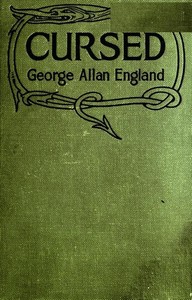
Cursed — Context and Discussion
(1 User reviews)
223
Project Gutenberg
2015
Ship captains -- Fiction; New England -- Fiction; Grandparent and child -- Fiction; Voyages and travels -- Fiction
Readers of public-domain and historical texts
Project Gutenberg digital edition
en
Edition facts
Words: 102,258
Reading time: 445 min
Text sections: 13
Source:
Project Gutenberg record #48068
This editorial note examines how George Allan England's 1919 novel uses its opening Malay setting, a curse, and a fractured family dynamic to guide first-time readers through a sea story blending adventure with psychological tension.
Editorial Edition Score
4.8/5
★★★★★
★★★★★
Calculated from edition completeness, EPUB availability, text structure and catalogue metadata. Not a user rating.
Edition quality
The opening chapter of Cursed plunges the reader into a vividly rendered Malay setting: Batu Kawan, a squalid campong on the Timbago River, where the clipper-ship Silver Fleece is delayed. The prose is dense with sensory detail—copper sunset, areca-palms, miasmatic swamps—and establishes an atmosphere of decay and menace. The witch-woman Nenek Kabayan appears early, hurling curses at Captain Alpheus Briggs, setting in motion a plot that intertwines supernatural threat with the captain's strained relationship with his grandson Hal. The excerpts show a narrative that alternates between external adventure (a Malay fleet, battles) and domestic tension (Hal's drunken outburst, the captain's forgiveness). The curse itself is a recurring motif, but the story's emotional core lies in the Briggs family's struggle with pride and reconciliation.
A Setting Steeped in Menace
The novel opens with a landscape that feels almost alive with threat: the mountains are “tawny-shouldered,” the mists are like “thin, white breath of ghosts,” and the campong is “pestilent, malodorous, sinister.” This is not a neutral backdrop but an active force. The narrative lingers on details that suggest decay and danger—the “drowned paddy-fields,” the “boat-jammed” river—before introducing any human conflict. The witch-woman's curse, delivered with “crooked claws” and “shrill curses,” emerges from this environment as a natural extension of its hostility. For a first-time reader, the setting primes expectations of a story where the physical world is as much an antagonist as any character.
The Curse as a Narrative Engine
The curse of Nenek Kabayan is not merely a plot device; it is a structural anchor. The chapter titles trace its arc: from “The Curse of Nenek Kabayan” to “The Reading of the Curse” and “One Must Die.” Yet the excerpts reveal that the curse's power is ambiguous. In later chapters, the focus shifts to interpersonal conflicts—Hal's temper, the captain's guilt—suggesting that the curse may be a metaphor for inherited flaws or psychological burdens. The narrative leaves room for doubt: is the curse literal or a reflection of the characters' own fears? This ambiguity invites readers to interpret the supernatural elements as either real or symbolic, a tension that sustains interest through the novel's 44 chapters.
Voice and Dialogue as Character Revelation
England uses dialogue to reveal character with economy. Captain Briggs speaks in a clipped, nautical idiom: “Everything's all right now, Hal… It was pretty shoal water there, one while.” Ezra, the cook, offers folksy wisdom: “Understand females? Not me! Some men think they do, but then, some men is dum fools.” Hal's transformation from a “mask of vicious hate and rage” to a placid young man is conveyed through his speech and actions. The excerpts show that the novel's emotional weight often rests on these exchanges, where forgiveness and understanding are negotiated through plain, direct language. The dialogue grounds the story's more melodramatic elements in recognizable human interaction.
Structure and Pacing Across the Excerpts
The excerpts span the novel's beginning, middle, and later stages, revealing a shift in pacing and focus. Early chapters (I–IV) are dense with description and action: the curse, the Malay fleet, the battle. Middle chapters (XXIV onward) slow to domestic scenes—breakfast conversations, walks with Laura Maynard—that explore character relationships. The later excerpts hint at a return to crisis (“One Must Die,” “Curaré”), but the excerpts do not resolve the plot. This structure suggests a novel that balances adventure with introspection. For a first-time reader, the early chapters set a brisk pace, while the middle sections reward patience with deeper character work. The incomplete excerpts leave the curse's outcome uncertain, encouraging readers to continue.
Readers approaching Cursed for the first time should attend to how England weaves the supernatural into a family drama. The curse is never fully explained in the excerpts, and its resolution may depend on how literally one reads it. Pay attention to the dialogue, which often carries the story's emotional truth, and to the setting, which mirrors the characters' inner turmoil. The novel rewards those who accept its blend of adventure and psychological tension.
-

Brandy Moore - 1 month ago
Cursed relies on cheap jumps scares and clichés rather than original storytelling. The plot is predictable, and the characters are flat. The writing is mediocre, and the ending is unsatisfying. If you're a horror fan, you'll find this derivative and dull. There are much better options out there. -
Jill Wagner - 2 weeks ago
Cursed has an intriguing concept and a strong opening. The suspense is handled well, but the middle section drags a bit. The characters are interesting, though some are underdeveloped. It's a decent horror read, but it doesn't fully live up to its potential. -
Thomas Morales - 5 days ago
Cursed is a gripping and atmospheric read that keeps you on the edge of your seat. The author masterfully builds tension, and the supernatural elements are well-integrated into the plot. The protagonist's journey is both haunting and compelling, with twists that are genuinely surprising. The writing is evocative, creating a dark, immersive world. Fans of horror and suspense will absolutely love this.
Reader reflection
Record your reading impressions
A brief reflection can help important ideas stay with you longer.
Your progress
0
/
10
2
Was reading this book enjoyable?
3
Is this a title you would suggest to others?
4
How easy was the book to follow?
5
How would you describe its reading pace?
6
Did it raise ideas you would like to talk about?
7
Which aspect of the book did you value most?
8
What was its emotional impact?
9
What did this book teach you most?
10





Grace King
1 week ago